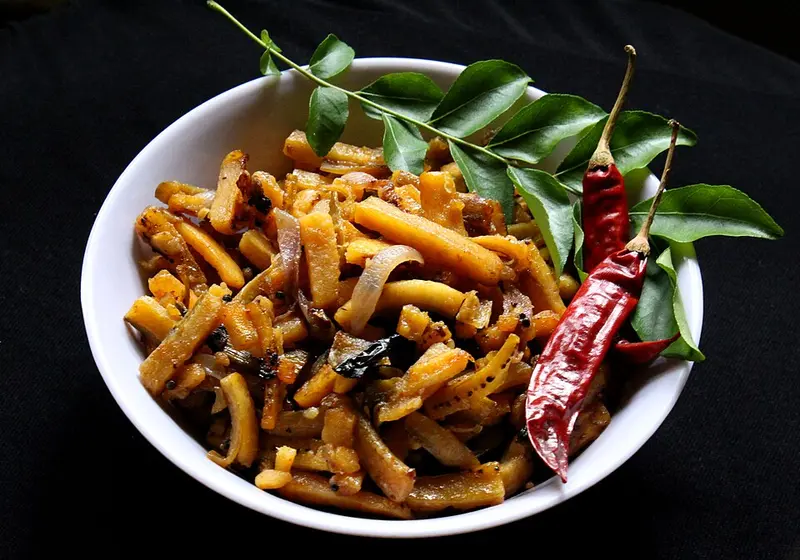
Raw banana sabzi (kele ki sabzi)

A quick dry sabzi of green bananas cooked with cumin, ginger and spices. Great with roti and dal.
Prep 15 min · Cook 20 min · Serves 4 · Comments

Jump to recipe
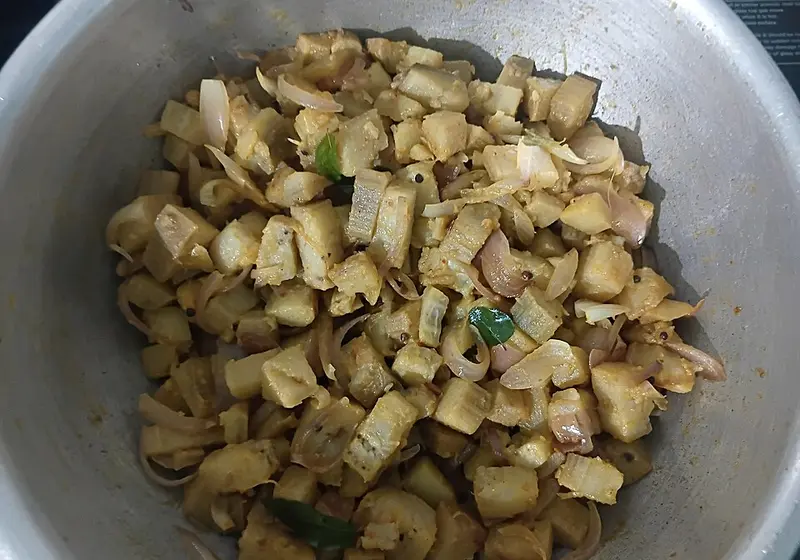
Kadai of raw banana sabzi with cubes of green banana, spices and fresh coriander

This raw banana sabzi is the simple, dry kind of curry that gets made in North Indian homes when the vegetable basket is running low. Green bananas are cut into cubes and cooked in a little oil with cumin, ginger, green chilli and a few ground spices. A pinch of dry mango powder at the end gives it a gentle sour lift. In Hindi it's called kacche kele ki sabzi, which just means raw banana vegetable.

If you've never cooked raw banana before, think of it like a firm potato with a slightly nutty taste. It holds its shape, soaks up spices well and goes soft and creamy inside once it's cooked. It's cheap, it's filling, and it takes about 35 minutes from start to finish. Below the recipe you'll find tips on picking and peeling raw bananas, easy variations, what to serve it with and an honest look at how healthy it is.

Quick version: peel and cube 4 raw bananas and keep them in water. Fry cumin, hing, ginger and green chilli in 2 tbsp oil, add turmeric, coriander powder and chilli, then the drained bananas and salt. Add 1/4 cup water, cover and cook on low for 10 to 12 minutes until soft. Finish with mango powder, garam masala and coriander.

What is raw banana sabzi?

Sabzi is the everyday word for a cooked vegetable dish in North India. Some sabzis have a gravy; this one is a sukhi or dry sabzi, where the vegetable is cooked with just enough water to soften it and then left to dry out and pick up a bit of colour in the pan. You eat it with roti or paratha, or as a side next to dal and rice.

Raw bananas here means cooking bananas, sometimes sold as green plantains or kacha kela. They're a starchy variety that's picked and cooked while green. Ordinary sweet bananas that just haven't ripened yet can work at a push, but they're softer and break up more easily.

How to pick and peel raw bananas

Look for bananas that are fully green, firm all over and heavy for their size. Skip any with yellow patches or soft spots, as they've started to ripen and will turn sweet and mushy. Indian grocers usually sell them loose; in some supermarkets you'll find them labelled green plantains. One medium raw banana weighs about 150 g whole and gives roughly 120 g once peeled.

  1. Rub a little oil on your hands or wear gloves. Raw banana has a sticky sap that stains skin and knives dark.
  2. Cut off both ends, then run a peeler down the length to take off the thick green skin. You can also slit the skin with a knife and pull it away in strips.
  3. Drop the pieces straight into a bowl of water as you cut them. Raw banana goes grey or brown within minutes once it meets the air. A pinch of salt and turmeric in the water helps too.
  4. Cut into even cubes of about 1.5 cm (just over 1/2 inch) so they cook at the same speed.

Some cooks just scrape off the outer green layer and leave the thin inner skin on for extra fibre and a bit of bite. That works well if your bananas are young and tender. Older bananas have tougher skin, so peel them fully.

Ingredient notes and swaps

  • Oil: mustard oil is classic in many North Indian kitchens and gives a sharp, warm flavour. Heat it until it just starts to smoke, then let it cool a little before adding the seeds. Sunflower, groundnut or any neutral oil is fine too.
  • Ajwain (carom seeds): optional, but a quarter teaspoon adds a nice thyme-like flavour and is traditional with starchy vegetables.
  • Hing (asafoetida): just a pinch for a savoury, oniony note. Use a gluten-free brand if that matters to you, as many are mixed with wheat flour.
  • Amchur (dry mango powder): gives the gentle sourness. No amchur? Squeeze in 1 to 2 tsp lemon juice at the end instead.
  • Onion: leave it out for the plain, no-onion style, or add one sliced onion for a slightly sweeter, softer sabzi.

Raw banana sabzi (kele ki sabzi)

A quick dry sabzi of green bananas cooked with cumin, ginger and spices. Great with roti and dal.

Prep
15 min
Cook
20 min
Total
35 min
Serves
4

Ingredients

    For the sabzi

    • 4 medium raw (green) bananas, about 600 g (1 1/3 lb) whole or 480 g peeled
    • 2 tbsp mustard oil or any neutral oil
    • 1 tsp cumin seeds
    • 1/4 tsp ajwain (carom seeds), optional
    • A pinch of asafoetida (hing)
    • 1 small onion, thinly sliced (optional)
    • 1 tsp grated ginger, or 1/2 tsp ginger paste
    • 1 to 2 green chillies, finely chopped

    Spices

    • 1/2 tsp ground turmeric, plus a pinch for the soaking water
    • 1 1/2 tsp ground coriander
    • 1/2 tsp Kashmiri chilli powder (or 1/4 tsp hot chilli powder)
    • 3/4 tsp salt, or to taste
    • 1/4 cup (60 ml) water

    To finish

    • 1/2 tsp amchur (dry mango powder), or 1 to 2 tsp lemon juice
    • 1/4 tsp garam masala
    • 2 tbsp chopped fresh coriander (cilantro)

    Method

    1. Fill a large bowl with water and stir in a pinch each of salt and turmeric. Peel the raw bananas, cut them into 1.5 cm (about 1/2 inch) cubes and drop them into the water as you go so they don't turn brown.
    2. Heat the oil in a wide pan or kadai over medium heat. If you're using mustard oil, let it just reach smoking point, then turn the heat down for a minute.
    3. Add the cumin seeds and ajwain and let them sizzle for 10 to 15 seconds. Add the hing, then the onion if using, and cook for 3 to 4 minutes until soft and light golden.
    4. Add the ginger and green chilli and stir for 30 seconds. Turn the heat to low and add the turmeric, ground coriander and chilli powder. Stir for 15 seconds so the spices cook in the oil without burning.
    5. Drain the bananas well and tip them into the pan with the salt. Stir gently for 1 to 2 minutes until every piece is coated in the spices.
    6. Pour in the 1/4 cup of water, cover with a lid and cook on low heat for 10 to 12 minutes. Stir gently every 3 to 4 minutes, scraping the bottom, and add a splash more water only if it starts to stick.
    7. Check a piece: it should be soft all the way through when you press it with a spoon, but not falling apart. Take off the lid and cook for 3 to 4 more minutes on medium heat, stirring now and then, so the edges dry out and pick up a little colour.
    8. Sprinkle over the amchur and garam masala, stir once and turn off the heat. Scatter with coriander and serve hot with roti, paratha or dal and rice.

    Don't stir too hard. Cooked raw banana is soft and breaks easily, so fold it gently with a flat spatula. Pressure cooker shortcut: cook the whole unpeeled bananas for 1 whistle, cool, peel and cube, then add them to the spiced oil with no water and fry for 5 minutes. Make it ahead: it tastes just as good the next day.

    Approx. per serving (1 of 4): about 180 calories, made with 4 medium raw bananas, 2 tbsp oil and one small onion. Worked out from USDA values.

    Tips for the best raw banana sabzi

    • Keep the cubes the same size. Small pieces turn to mush while big ones are still hard in the middle.
    • Use only a little water. Raw banana steams in its own moisture once the lid is on. Too much water and you get a sticky, mashed sabzi.
    • Cook on low with the lid on, then finish with the lid off. Covered cooking softens the banana; the last few uncovered minutes give it flavour and a bit of colour.
    • Add the sour bit at the end. Amchur or lemon added early can stop the banana softening properly.
    • Taste for salt after cooking. Starchy vegetables soak up salt, so you may need a pinch more than you think.
    • Sticky hands? A little oil or a squeeze of lemon rubbed on your hands lifts the banana sap off.

    Easy raw banana sabzi variations

    • With tomato and onion: after the onion, add 1 chopped tomato and cook until it turns soft and pulpy before adding the bananas. You get a moister, saucier sabzi.
    • With peanuts: fry 2 tbsp raw peanuts in the oil until they crackle and darken a shade, then carry on with the cumin. They add crunch and some protein.
    • Methi kela: stir in a big handful of chopped fresh fenugreek (methi) leaves for the last 5 minutes. It adds a pleasant bitterness that works well with the mild banana.
    • Crispy dry fry: cut the banana into thinner pieces, skip the water and cook uncovered on low heat with an extra tablespoon of oil, stirring often, for about 20 minutes.
    • South Indian style: swap the cumin for mustard seeds, urad dal and curry leaves, and finish with grated coconut. For a crisper version, try our vazhakkai fry.

    What to serve with kele ki sabzi

    • Hot roti, chapati, phulka or plain paratha
    • A bowl of everyday turmeric dal and steamed rice for a full meal
    • Plain yoghurt or cucumber raita, which cools the spice
    • Pickle, sliced onion with lemon and a papad on the side
    • As part of a lunch bowl with rice or quinoa, greens and a protein. Our guide to a balanced bowl shows how to put one together.

    Is raw banana healthy?

    Raw banana is a decent everyday vegetable, but it isn't magic. Green bananas are rich in resistant starch (a type known as RS2), which behaves a bit like fibre. It isn't digested in the small intestine and instead feeds the bacteria in your gut. Raw banana also has less sugar than ripe banana, because the starch hasn't yet turned into sugar, and it tends to keep you full for a while.

    Cooking changes things. Heat softens the starch and breaks down much of the RS2, so a hot sabzi has a lot less resistant starch than the raw banana you started with. When cooked banana is cooled, some of the starch firms up again into a different type called RS3. So leftovers eaten the next day may have a little more resistant starch than the freshly cooked dish, though the amounts are modest.

    For calories, a medium ripe banana is about 105 calories (USDA), and raw banana is in the same range by weight. Most of the extra calories in this dish come from the oil, so use 1 tablespoon if you're keeping an eye on that. It's still a starchy food, so if you have diabetes, count it as a carb portion rather than a free vegetable. For the full story, read our article on green banana benefits.

    Storage and reheating

    Let the sabzi cool, then keep it in a covered container in the fridge for up to 2 to 3 days. Reheat in a pan with a splash of water and a lid, or in the microwave, until hot all the way through. It firms up when cold, so a little water helps loosen it. We don't recommend freezing, as the banana turns watery and grainy once thawed. Cold leftovers are also nice tucked into a roti wrap with some chutney.

    Questions about this recipe

    Usually yes. The thick outer green skin is tough and slightly bitter. If the bananas are young and tender, you can just scrape off the outer layer and keep the thin inner skin, which adds fibre and a bit of texture.

    Raw banana browns quickly when the cut surface meets the air, much like apples and potatoes. Drop the pieces into water as you cut them, with a pinch of salt and turmeric, and drain just before cooking.

    Press a cube with the back of a spoon. If it gives way easily and is soft all the way through, it's done. It should still hold its shape. Undercooked raw banana feels firm and tastes starchy and a little astringent.

    You can, if they're fully green and firm. They cook faster and break up more easily, so cut them a bit bigger, use less water and check them after about 6 minutes.

    It can fit into a weight loss diet. Raw banana is filling and lower in sugar than ripe banana, and a serving of this sabzi is about 180 calories. Keep the oil modest and pair it with dal, yoghurt and vegetables rather than lots of fried sides.

    Raw banana has less sugar than ripe banana and some resistant starch, but it's still a starchy food and cooking reduces that resistant starch. Treat it like potato: keep portions moderate, eat it with protein and fibre, and talk to your doctor or dietitian about what suits you.

    General information only, not medical advice.

    Written by

    The turmaslim editorial team

    We write plain-English guides to everyday food, natural ingredients and small healthy habits. We read the research so you don't have to, and we say so when the evidence is thin. How we write.

    Last updated October 27, 2026

    Read nextRaw banana fry (vazhakkai fry)

    Comments

    Loading comments…

    Leave a comment

    Comments are checked before they appear. Please be kind, and don't share personal medical details.

    More green banana recipes

    Plate of crispy raw banana fry slices coated in red spices with curry leaves

    Recipe · Side dish

    Raw banana fry (vazhakkai fry)

    Spicy, crisp-edged slices of green banana pan-roasted with curry leaves. A classic side for rice and sambar.
    30 min · serves 3
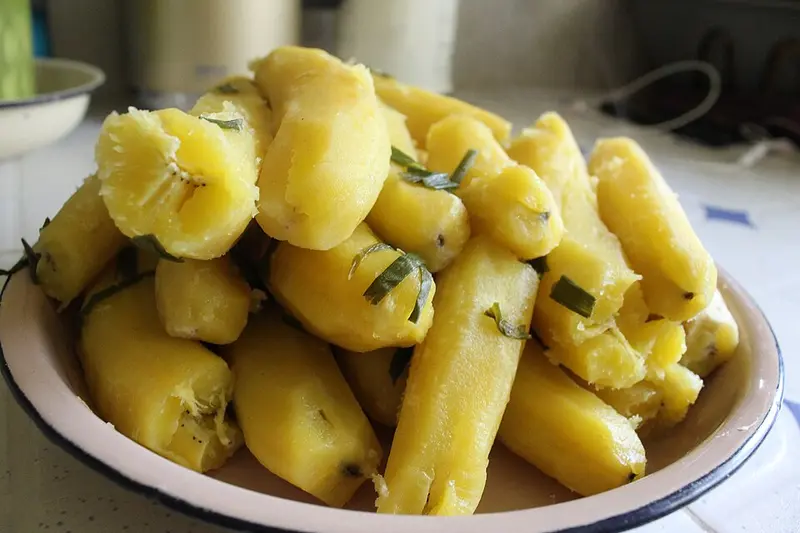
    Green banana salad in a bowl with sliced red onion, chopped coriander, lime wedges and a drizzle of olive oil

    Recipe · Salad

    Green banana salad

    Boiled and cooled green bananas tossed with red onion, herbs, lime and olive oil. Filling, cheap and great made ahead.
    35 min · serves 4
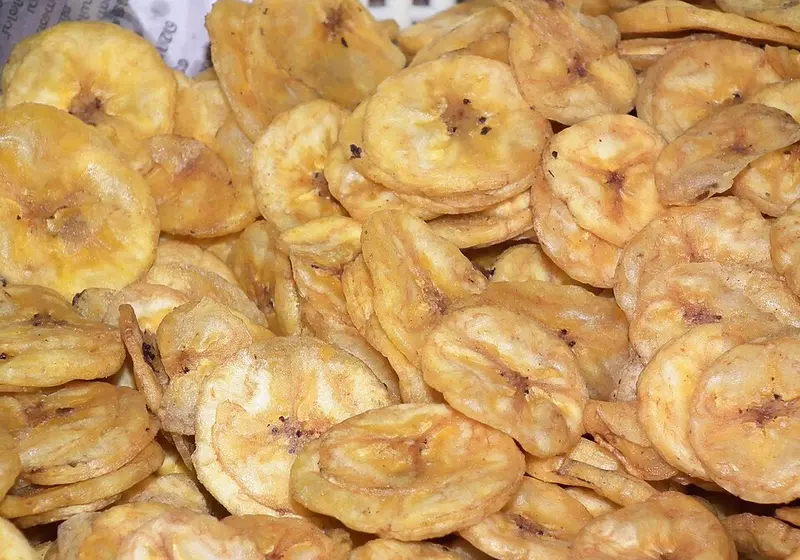
    Golden baked green banana chips in a bowl, sprinkled with salt and black pepper

    Recipe · Snack

    Baked green banana chips

    Thin green banana slices baked or air-fried with a little oil and salt until crisp. A lighter take on Kerala-style chips.

    50 min · serves 4