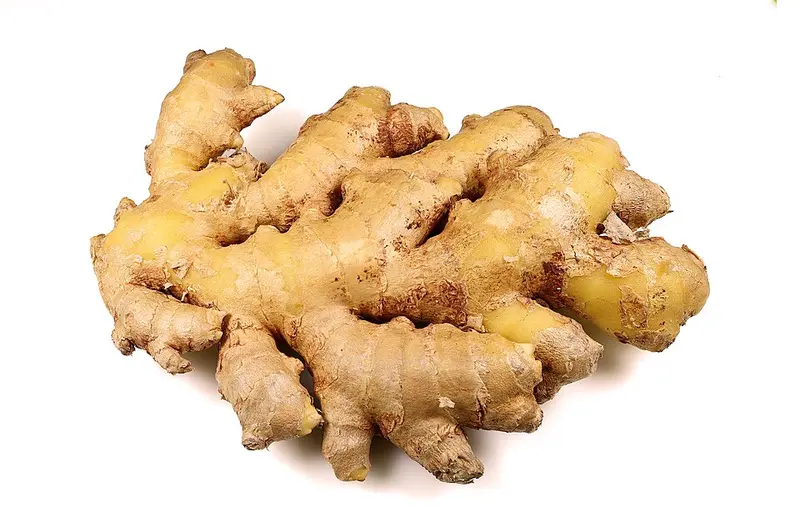
Superfood guide
Get to know ginger
From kitchen staple to everyday ingredient.
The honest guide: calories per teaspoon, what the research says about curcumin, 10 side effects worth knowing, and easy ways to use it.
Turmeric is everywhere right now. Lattes, gummies, shots, capsules with black pepper, face masks. Depending on who you ask it fixes your joints, your gut, your mood and your waistline. So we went and read the actual research, plus the nutrition data from the USDA, to sort out what is real and what is just marketing.
Short version: turmeric is a great spice and a fine thing to eat every day. The big health claims mostly come from studies on concentrated curcumin pills, not the spoonful in your curry. And those pills do come with some side effects worth knowing about.
Quick answers
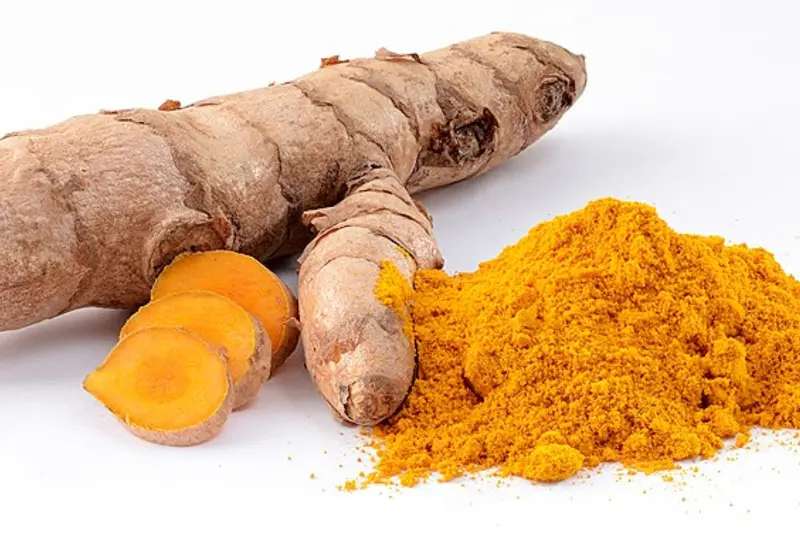
Turmeric (Curcuma longa) is a root from the ginger family. Fresh, it looks a lot like ginger, but cut it open and it is bright orange inside. The powder in your spice rack is just that root, boiled, dried and ground.
The yellow colour comes from compounds called curcuminoids. The main one is curcumin, and that is the stuff scientists study. Here is the catch most articles skip: turmeric powder is only about 3% curcumin by weight. One lab study of 28 products found pure turmeric powder averaged 3.14%. So a teaspoon gives you roughly 90 mg of curcumin, while many studies use 500 to 2,000 mg a day.
These numbers come straight from the USDA FoodData Central entry for ground turmeric. Per 100 g it looks impressive, but nobody eats 100 g of turmeric. That is about 33 teaspoons. So we have also worked out a teaspoon and a tablespoon, which is what you actually use.
| Nutrient | Per 100 g | 1 tsp (3 g) | 1 tbsp (9.4 g) |
|---|---|---|---|
| Calories | 312 kcal | 9 kcal | 29 kcal |
| Carbohydrate | 67 g | 2 g | 6.3 g |
| Fibre | 22.7 g | 0.7 g | 2.1 g |
| Protein | 9.7 g | 0.3 g | 0.9 g |
| Fat | 3.3 g | 0.1 g | 0.3 g |
| Sugars | 3.2 g | 0.1 g | 0.3 g |
| Potassium | 2,080 mg | 62 mg | 196 mg |
| Iron | 55 mg | 1.7 mg | 5.2 mg |
| Manganese | 19.8 mg | 0.6 mg | 1.9 mg |
| Magnesium | 208 mg | 6 mg | 20 mg |
| Vitamin E | 4.4 mg | 0.1 mg | 0.4 mg |
| Sodium | 27 mg | 0.8 mg | 2.5 mg |
Source: USDA FoodData Central, "Spices, turmeric, ground" (FDC 172231). Teaspoon and tablespoon weights are USDA's own. Values are rounded.
Almost none, in the amounts people use. 1 teaspoon of ground turmeric is about 9 calories and 1 tablespoon is about 29. Even a big turmeric latte with a whole teaspoon in it gets nearly all its calories from the milk and the sweetener, not the spice.
Per 100 g, yes, it is very high (2,080 mg). Per teaspoon, no. A teaspoon has about 62 mg, which is roughly 1% of the daily value. For comparison, a medium banana has around 420 mg. If you are on a low-potassium diet for kidney disease, normal cooking amounts are not a big deal, but ask your dietitian about supplements and large doses.
The standout is manganese: one teaspoon gives about a quarter of your daily value. Turmeric also lists a lot of iron (1.7 mg per teaspoon, about 9% of the daily value). Take that iron number with a pinch of salt, though. The USDA figure comes from a single lab sample, and spices can pick up iron from soil and grinding. Turmeric is not really a meaningful source of vitamins. There is a little vitamin E and vitamin K, and basically no vitamin C in the powder.
Fresh turmeric is mostly water (about 84%), so it is much lower in calories by weight. The Philippine government's food composition table lists raw turmeric root at about 71 calories per 100 g, with 9.6 g of carbs and 4.1 g of fibre. The USDA has no entry for fresh turmeric, and good data on it is honestly thin, so treat those numbers as a rough guide.
This is where it gets messy. The US National Center for Complementary and Integrative Health (NCCIH) puts it bluntly: we don't know enough yet to say for sure that turmeric or curcumin helps with any health problem. That doesn't mean it does nothing. It means most studies are small, short, and use concentrated curcumin products. Here is a fair summary.
| Claim | Evidence | What the studies found |
|---|---|---|
| Knee arthritis pain | Moderate | Less pain and stiffness than placebo, about as good as some painkillers in small trials |
| Inflammation markers | Moderate | Lower CRP, IL-6 and TNF-α in blood tests. That is not the same as feeling better |
| Indigestion | Limited | One trial: curcumin worked about as well as omeprazole for indigestion |
| Blood sugar | Limited | Small drops in HbA1c and fasting glucose, only in people with diabetes or prediabetes |
| Muscle soreness | Limited | A bit less soreness after hard exercise |
| Mood | Limited | May help a little alongside normal depression treatment, never instead of it |
| Cholesterol | Limited | Small drops in triglycerides; LDL results are mixed |
| Weight loss | Weak | About 0.6 kg (1.3 lb) more weight loss on average |
| Memory, heart, skin | Early / mixed | Studies disagree or are too small to say |
Nearly all of these trials used curcumin supplements (often 500 mg to 2 g a day), not cooking amounts of turmeric.
This is the best-supported use. A 2022 meta-analysis found curcumin beat placebo for knee osteoarthritis pain and function, and did about as well as NSAID painkillers like ibuprofen, with similar side effects. The trials are small, so it is promising rather than proven. If you are thinking of trying it for sore knees, tell your doctor, especially if you already take painkillers or blood thinners.
You will see turmeric called "anti-inflammatory" everywhere. In a large review of trials (almost 6,000 people), curcumin did lower blood markers of inflammation like CRP and IL-6. But lower numbers on a blood test do not automatically mean less pain or less disease, and the studies varied a lot.
A Thai trial with about 200 people found 2 g of curcumin a day eased indigestion about as well as omeprazole, a common acid reducer. Interesting, but it is one study, and it had no placebo group. Funnily enough, high doses of turmeric can also cause stomach upset (more on that below).
In people with type 2 diabetes or prediabetes, curcumin lowered HbA1c by about half a point and fasting sugar a little. It may also trim triglycerides. These are real but modest effects, and they come on top of medicine, food and exercise, not instead of them.
We get asked this a lot (the name doesn't help). The honest answer: not really. A big 2023 review of 50 trials found people taking curcumin lost about 0.6 kg (1.3 lb) more than people on placebo, over weeks to months. Waist size dropped by just over a centimetre. That is a tiny effect, and it showed up mostly in people with obesity or diabetes who were also changing their diet. There is no good evidence that adding turmeric to food burns fat. If a product promises turmeric slimming, be sceptical.
There are small studies on all of these. Curcumin may help mood a bit when added to normal depression care. Memory results are mixed; one 2025 review found a benefit in people over 60, another found none. Blood pressure studies disagree. Skin studies are early. Nice to know, not reasons to buy a supplement.
Curcumin is poorly absorbed. Your gut and liver break it down fast, and in one study 2 g of plain curcumin left almost nothing in people's blood. That is why so many products add black pepper.
Black pepper contains piperine. In a small 1998 study, adding 20 mg of piperine to 2 g of curcumin raised absorption by about 2,000%. That number gets quoted everywhere, but it came from a handful of volunteers and has not been well repeated. Curcumin also dissolves in fat, so cooking it in oil, ghee or coconut milk probably helps too.
In the kitchen: a pinch of black pepper and a little fat is a good habit and completely safe. In pills: it is a different story. Piperine slows how your body clears some medicines, and "high-absorption" curcumin products are the ones most linked to liver problems. More absorption is not automatically better.
Turmeric in food is very safe. Nearly every side effect below comes from supplements, high doses, or specific health conditions. Here is what the evidence supports.
As food: a teaspoon or two a day in cooking is normal and safe. People in India commonly eat around 2 to 2.5 g of turmeric a day (roughly a teaspoon) over a lifetime.
As a supplement: studies usually use 500 mg to 2 g of curcumin a day for up to about three months. NCCIH says standard products are likely safe in recommended amounts for 2 to 3 months. European and WHO food safety experts set an acceptable daily intake of 3 mg of curcumin per kg of body weight, which is about 180 mg a day for a 60 kg adult and 210 mg for 70 kg. That limit is a conservative lifelong number, not a danger line, but it shows how far above everyday eating most supplements go.
If you want to take curcumin for a reason, like knee pain, talk to your doctor or pharmacist first, pick a plain product (not "enhanced absorption") and stop if you notice any warning signs.
Buying tips for turmeric powder: pick a brand you trust, avoid suspiciously bright or cheap loose powder, and store it in a closed jar away from light. It loses flavour after a year or so.
The best way to enjoy turmeric is in food you actually want to eat. A few easy ideas:
Here are our turmeric recipes, each one simple enough for a weeknight:
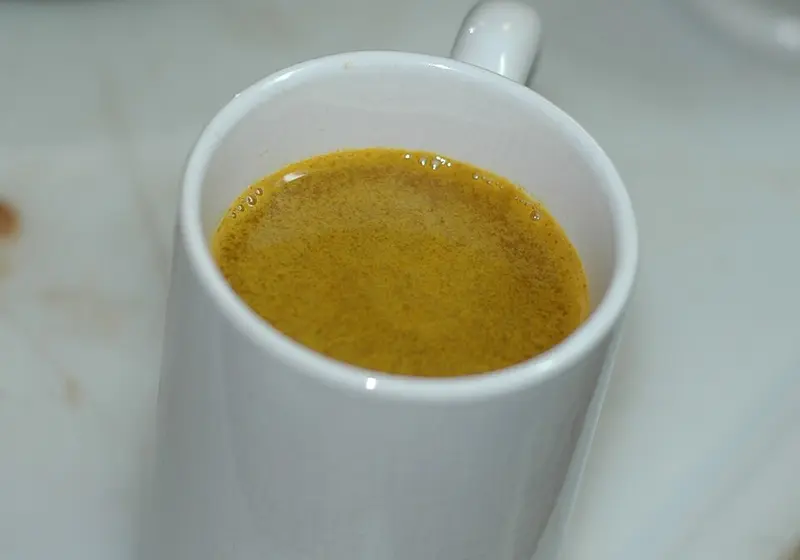 Drink · 12 minTurmeric tea (fresh or ground)
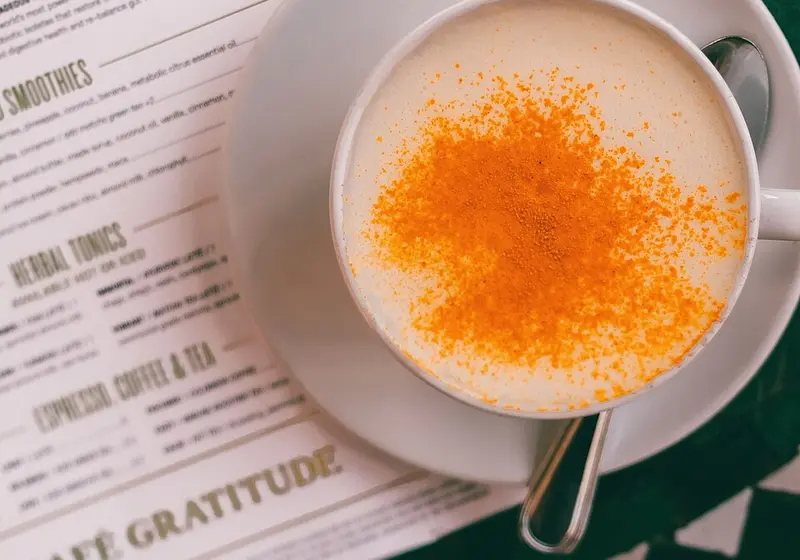 Drink · 7 minGolden milk (turmeric latte)
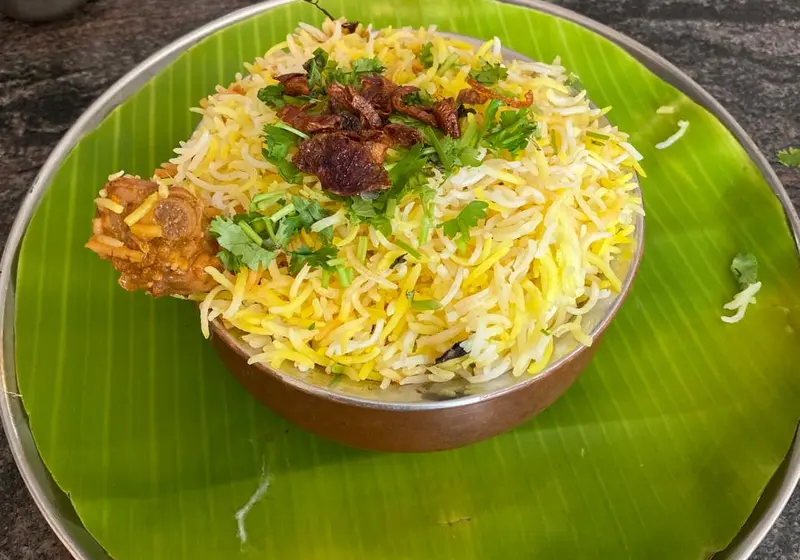 Side dish · 30 minGolden turmeric rice
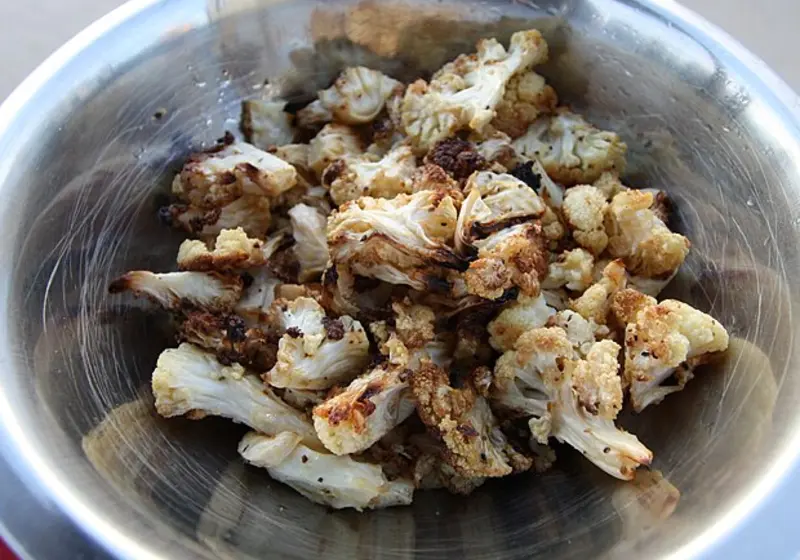 Side dish · 40 minTurmeric roasted cauliflower
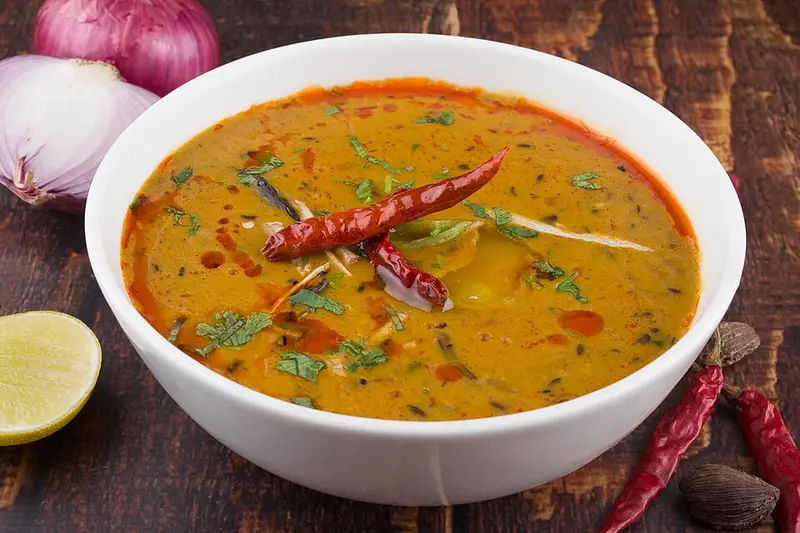 Main · 40 minEveryday dal with turmeric
Curious about turmeric's cousin? Read our guide to ginger, including how many calories it has, or browse the full nutrient guide.
About 9 calories. One teaspoon of ground turmeric weighs about 3 g, and turmeric has 312 calories per 100 g (USDA). A tablespoon has about 29 calories.
Yes, in food. A teaspoon or so a day in cooking or drinks is normal and safe for almost everyone. Daily high-dose supplements are different: talk to your doctor first, especially if you take medication.
In cooking, yes. A pinch of pepper with turmeric is a normal combination. In supplements, piperine raises absorption of curcumin and of some medicines, and high-absorption products are linked to more liver injury reports, so be more careful there.
No good evidence says so. Curcumin pills helped people lose about 0.6 kg (1.3 lb) more than placebo on average in studies, which is a very small effect. Cooking with turmeric does not burn fat.
Turmeric in food: no evidence of that. Turmeric and curcumin supplements have been linked to rare cases of liver injury, often with high-dose or high-absorption products. Stop and see a doctor if you get dark urine, yellow eyes or skin, or unusual tiredness.
Neither is clearly better for health. Fresh tastes brighter and is lower in calories by weight because it is mostly water. Powder is more concentrated. Use about 1 tablespoon of grated fresh root for every teaspoon of powder.
There is no proven best time. With food is a good idea: the fat in a meal may help absorption, and it is gentler on your stomach.
This article is for general information and is not medical advice. Talk to your doctor before changing your diet or taking supplements.
Read next
Superfood guide
From kitchen staple to everyday ingredient.
Superfood guide
What cocoa flavanols really do for blood flow, blood pressure and the heart, cocoa extract vs cocoa powder, how much to take and how to choose a supplement.
Superfood guide
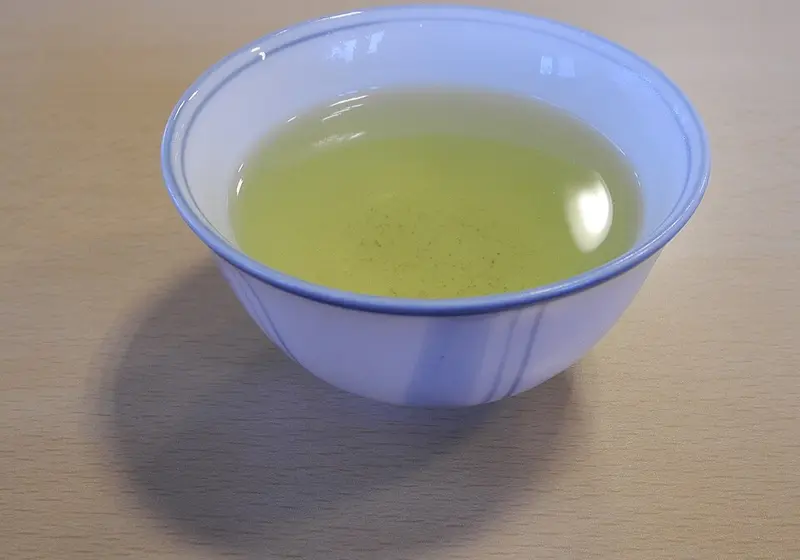
Green tea is gentle on caffeine and rich in antioxidants. The secret to a smooth cup is cooler water.
Loading comments…