Nutrition
Building a balanced breakfast
A practical way to start your day with variety.
Why unripe bananas are good for your gut and blood sugar, green vs yellow nutrition, the bitter green banana weight loss trend, side effects and how to eat them.
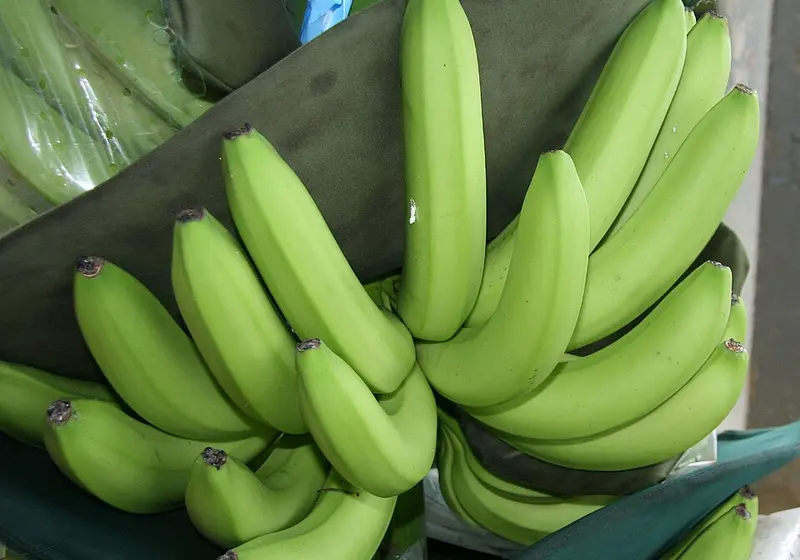
Green bananas are having a moment. People online are eating them raw, blending them into smoothies and calling them a "bitter green banana" hack for weight loss and gut health. Meanwhile, in Indian, Caribbean and African kitchens, green bananas have been cooked as a vegetable for generations.
So what's the real story? The short version: green banana benefits mostly come from one thing, resistant starch, a type of starch that acts more like fibre than sugar. It feeds your gut bacteria and doesn't spike blood sugar the way a ripe banana can. Below we cover green banana nutrition, what the research actually shows, weight loss vs weight gain, side effects, and easy ways to eat them.
Quick answer
Most starch, like the starch in bread or potatoes, gets broken down into glucose in your small intestine. Resistant starch "resists" that. It passes through to your large intestine mostly intact, where your gut bacteria ferment it. That's why it behaves a lot like fibre.
There are a few types. The ones that matter here:
When gut bacteria ferment resistant starch, they produce short-chain fatty acids, especially butyrate. Butyrate is the main fuel for the cells lining your colon, and it's a big reason researchers are interested in resistant starch for gut health.
Here's the key thing to understand. A green banana and a yellow banana have about the same calories and nutrients. What changes is the type of carbohydrate. In a very green banana, most of the carbs are starch, and much of that is resistant starch. As it ripens, enzymes turn that starch into sugar. By the time it's yellow with brown spots, most of the starch has become sugar, which is why ripe bananas taste so much sweeter.
| Green (unripe) | Yellow (ripe) | |
|---|---|---|
| Calories | About 105 (similar) | 105 |
| Total carbs | About 27 g, mostly starch | 27 g, mostly sugar |
| Sugar | Low | 14 g |
| Resistant starch | High | Low |
| Fibre | About 3 g + resistant starch | 3.1 g |
| Potassium | Similar | 422 mg |
| Taste and texture | Firm, starchy, slightly bitter | Soft, sweet |
| Blood sugar effect | Gentler, slower rise | Faster rise |
Ripe banana values: USDA FoodData Central, "Bananas, raw" (FDC 173944). Green banana values change with ripeness, so they are shown as a comparison rather than exact numbers.
Bananas also give you vitamin B6 (a medium banana has about a quarter of your daily needs), some vitamin C, magnesium and plenty of potassium, whether green or yellow.
A 2019 systematic review of green banana studies in children and adults found most of them reported benefits, mainly for digestion, blood sugar and feeling full. But many studies were small and used different products (green banana pulp, flour or starch), so the results are promising rather than proven. Here's the breakdown.
This is where green bananas shine. Resistant starch is a prebiotic: it feeds the friendly bacteria in your large intestine, which turn it into butyrate and other short-chain fatty acids. In lab and animal studies, green banana flour raised levels of acetate, propionate and butyrate. A more diverse, well-fed microbiome is linked with better gut health overall, though human research on specific outcomes is still growing.
Some of the most interesting research comes from Bangladesh, where cooked green banana was added to the diet of young children with persistent diarrhoea. The children who got green banana recovered faster than those who didn't. It's an old remedy in many countries, and the science backs it up for this use. Note that this was under medical supervision, alongside rehydration, not instead of it.
Because resistant starch isn't turned into glucose in the small intestine, green bananas cause a smaller, slower rise in blood sugar than ripe ones. Underripe bananas have a lower glycaemic index (GI) than ripe bananas. Studies with green banana flour in healthy adults and in people with type 2 diabetes have found better glucose control and improved insulin sensitivity. If you have diabetes, green bananas can be a better choice than very ripe ones, but they still contain carbs, so count them as part of your meal.
Resistant starch and fibre slow digestion and may increase fullness hormones. In studies, adults who had green banana flour felt more satisfied and ate a bit less afterwards. That's a real but modest effect.
Green banana has been studied for constipation as well as diarrhoea. Some children's studies found it helped both, which makes sense for something that adds bulk and feeds gut bacteria. Results in adults are mixed, and too much resistant starch can actually make some people more constipated (see side effects below).
The "bitter green banana" trend says eating unripe bananas will help you lose weight. Here's the honest take.
Neither, on its own. A medium banana has about 105 calories, about the same as a slice of toast with a little butter. Eaten as a snack instead of biscuits or crisps, bananas can help with weight loss. Eating several a day on top of everything else adds calories like any food would. Green bananas just give you more fullness and less sugar for the same calories.
Green bananas are safe for most people, especially cooked. A few things to know:
Yes, they're not toxic, but they're not very pleasant either. A fully green banana is hard, chalky and leaves your mouth dry. Most of the world eats green bananas cooked: boiled, steamed, curried or fried. If you want the raw-starch benefit without the struggle, two easy options:
Partly. Heat breaks open the starch granules (RS2), so cooked green banana has less resistant starch than raw. But when cooked starch cools, some of it re-forms into RS3. So boiling green bananas and letting them cool, for a salad or to reheat later, still gives you a useful amount. And even hot, cooked green banana is lower in sugar than ripe banana.
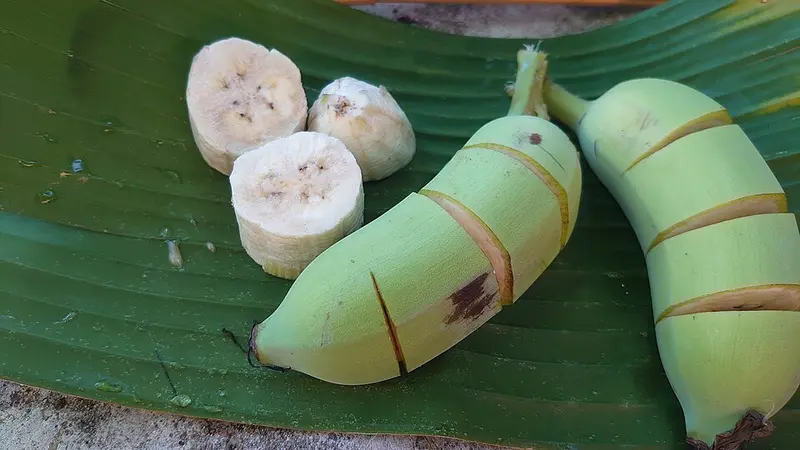
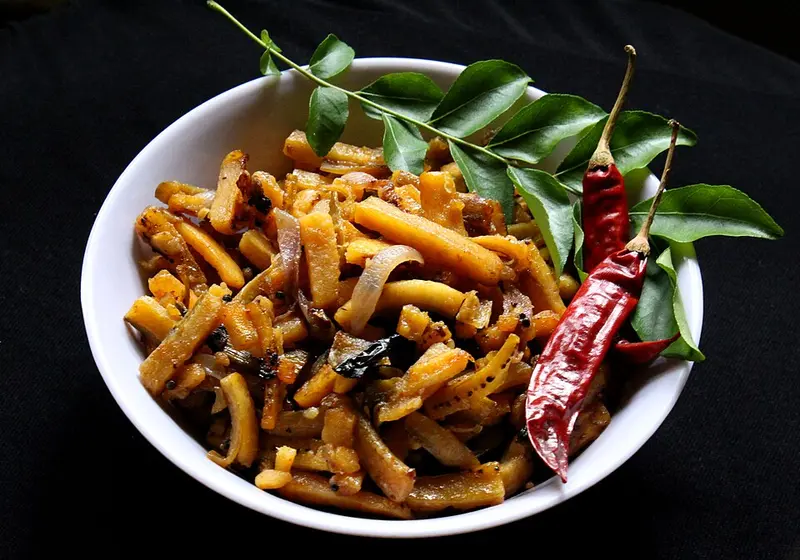
In India, raw banana (kaccha kela, vazhakkai in Tamil, kancha kola in Bengali) is treated as a vegetable, not a fruit. It's used in sabzi, poriyal, kofta, cutlets, chips and curries. In traditional Ayurvedic practice, raw banana is generally seen as a filling, "binding" food that is often given for loose stools, which lines up nicely with the modern diarrhoea research. These are traditional views rather than tested claims, but the cooking is delicious either way.
Want to try it? Our raw banana sabzi is an easy everyday North Indian version with a little turmeric, and the South Indian raw banana fry is crisp and spicy. Both are great with dal and rice.
Four easy ways to cook green bananas, from an Indian sabzi to a cooled salad (cooling keeps more resistant starch) and crunchy baked chips:
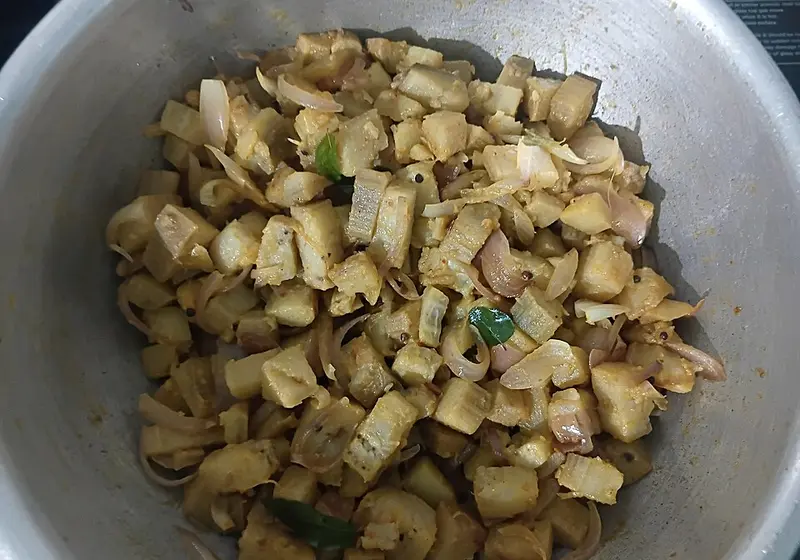 Side dish · 35 minRaw banana sabzi (kele ki sabzi)Side dish · 30 minRaw banana fry (vazhakkai fry)
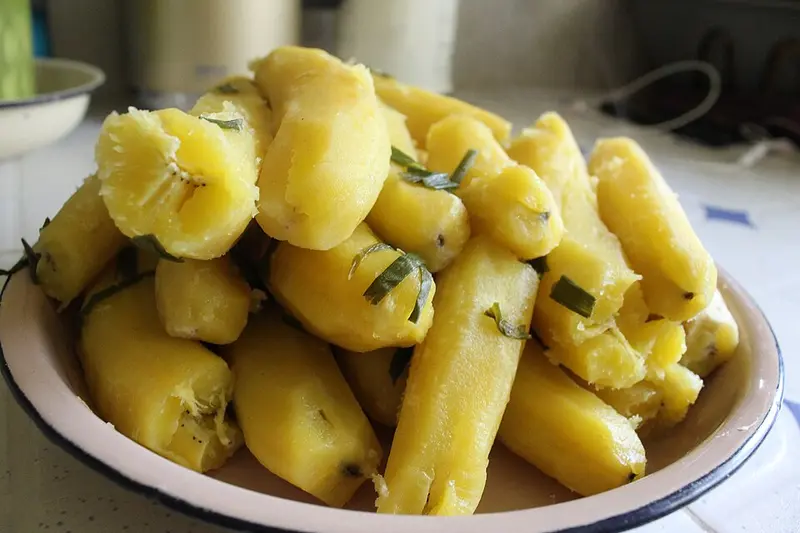 Salad · 35 minGreen banana salad
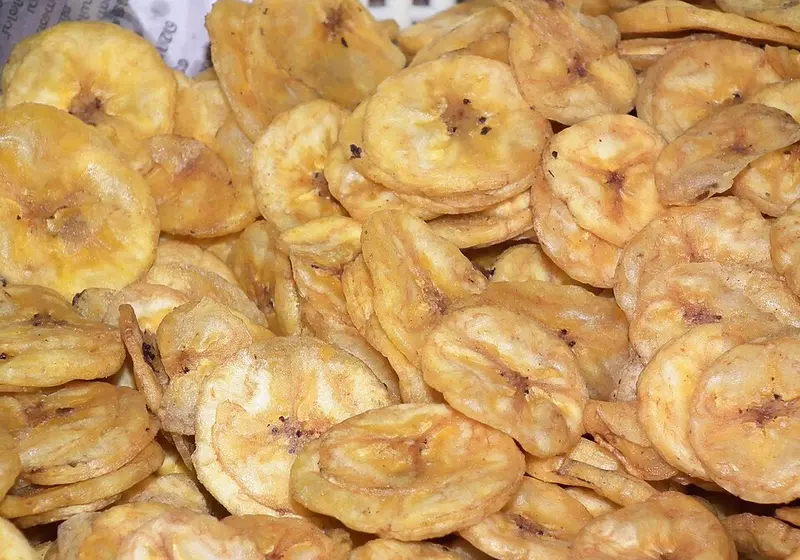 Snack · 50 minBaked green banana chips
Green bananas are a handy, cheap way to get more resistant starch, but they work best as part of a varied diet with plenty of other fibre: oats, beans, lentils, whole grains, vegetables and fruit. If you want ideas, see our guides to a balanced breakfast, overnight oats and building a healthy bowl. Start slow, cook them the way you enjoy, and let your gut get used to them.
Not better, just different. Green bananas have more resistant starch and less sugar, so they're gentler on blood sugar and better for feeding gut bacteria. Yellow bananas are sweeter, easier to digest and just as nutritious. Both are healthy.
About the same as a yellow one: roughly 105 calories in a medium banana (about 118 g). The difference is that more of a green banana's carbs are resistant starch, which your body doesn't fully absorb.
Unripe bananas are high in tannins, which make them taste bitter and leave your mouth feeling dry. As the banana ripens, tannins drop and starch turns into sugar, so it gets sweeter.
They can help a little because they're filling and low in sugar, so you may eat less. But they don't burn fat, and weight loss still depends on your overall diet and activity.
Usually yes, and they're often a better choice than ripe bananas because they raise blood sugar more slowly. They still contain carbs, so count them as part of your meal and check your readings.
They can, especially if you eat a lot suddenly. Resistant starch is fermented by gut bacteria, which makes gas. Start with a small amount and increase it over a couple of weeks.
This article is for general information and is not medical advice. Talk to your doctor before changing your diet or taking supplements.
Read next
Nutrition
A practical way to start your day with variety.
Nutrition
A simple formula for filling lunches: greens, protein, whole grains, healthy fat and something crunchy.
Nutrition
A no-cook, high-fibre breakfast you make the night before. One base recipe and four easy flavour ideas.
Loading comments…